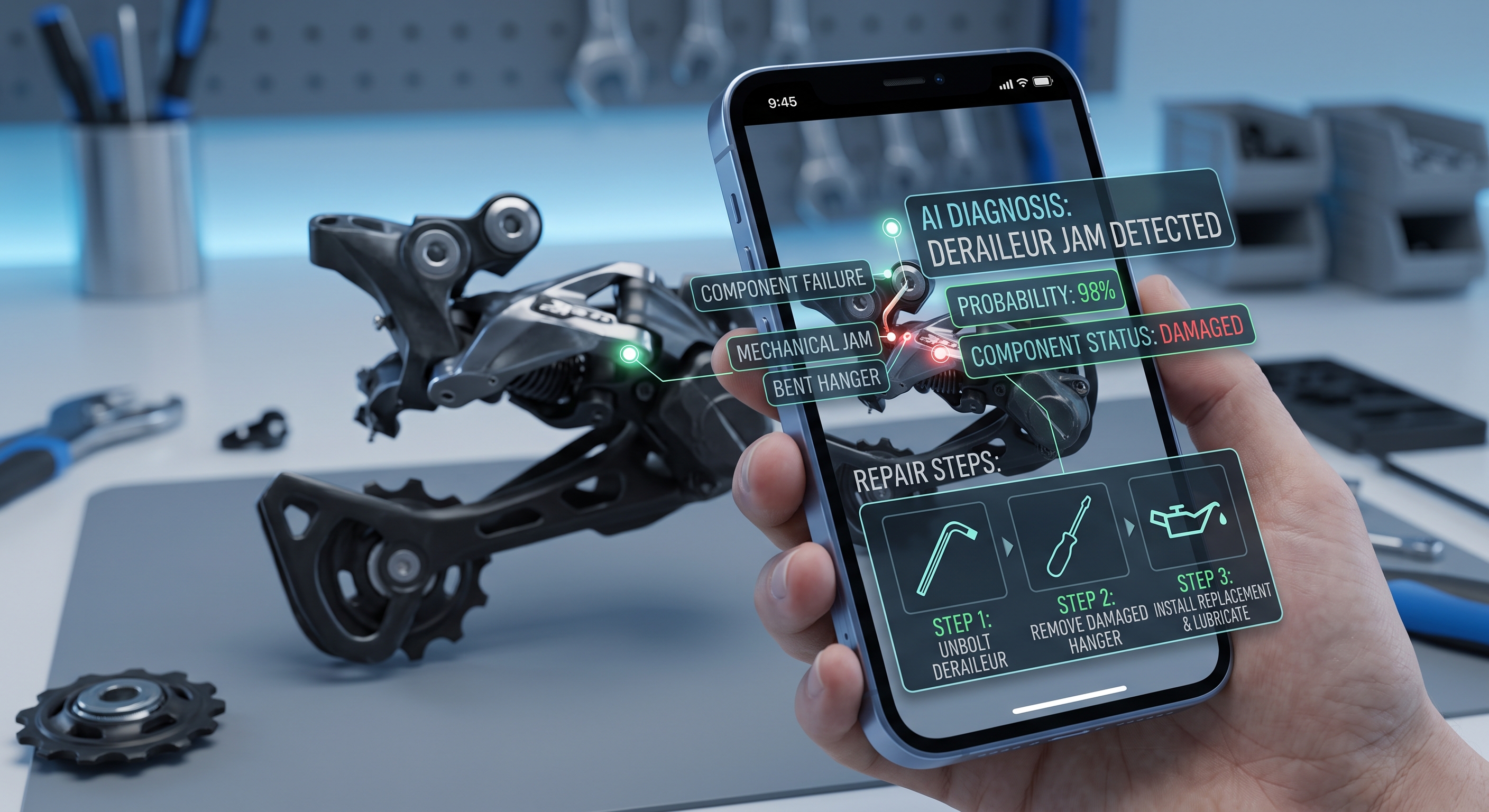
Faced with a broken object — a squeaky bicycle, a dripping faucet, an appliance that won't turn on — the first barrier isn't the repair: it's knowing what's wrong with it. Without a diagnosis there is no plan, and without a plan most things end up in the trash or in the hands of a technician who charges €60 just to look.
From "searching for the symptom" to "photographing the problem"
Traditional internet troubleshooting requires knowing how to describe the breakdown: what part it is, what it's called, what terms to search for. Vision AI reverses the process: you show it the photo and the model identifies the object, locates the damaged component, and proposes the most likely causes. That's what Fixeame does: you take a photo of the broken object and the app gives you a diagnosis and a step-by-step repair guide.
What a photo can diagnose
Computer vision works especially well with breakdowns that leave visible evidence:
- Mechanical damage: broken parts, wear and tear, rust, loose hardware.
- Appliances: LED states, visible fuses, damaged wiring.
- Bicycles and tools: misaligned or broken components that are easy to identify.
- Furniture and household items: joints, hinges, cracks.
Invisible internal breakdowns (a burnt electronic board with no external marks) still require measurements, but even then the AI narrows down the diagnosis based on the symptoms you describe.
To repair or not to repair: the informed decision
Diagnosis also answers the economic question: is it worth it? By knowing which part is failing, how much the replacement costs, and what tools are needed, you can make an informed decision — and in many cases the repair is a screw, a gasket, or a cleaning, not a new purchase.
When to call a professional
Honesty matters: gas, high-voltage electricity, structures, and breakdowns with a risk of fire are professional territory. A good diagnostic tool tells you this — its real usefulness is not to replace the technician, but to know when you need one and to make that call knowing what's wrong with the appliance.
Repairing is once again the default option
For years, throwing away and buying new was cheaper than figuring out what was wrong. When diagnosis costs a photo, the balance shifts: repair is no longer just for handymen and becomes accessible to anyone with a smartphone.